
August 3, 2026
If you’ve been asking yourself, “Is Invisalign right for my teeth, or do I need braces?”, you’re not alone. Many patients in Southlake, Texas, have the same question when considering orthodontic treatment. Both Invisalign and traditional braces can straighten teeth effectively, but they are not equally suitable for every situation. Understanding the differences can help you make a confident, informed decision.
At Tolleson Orthodontics, Dr. Shane Rex Tolleson and the team take a personalized approach to every orthodontic evaluation. There is no one-size-fits-all answer. Your bite, the complexity of your misalignment, your treatment goals, and your lifestyle can all influence which option may be right for you. This guide explains what Invisalign and braces can treat and how an orthodontist determines the most appropriate option.
What Invisalign Can Treat
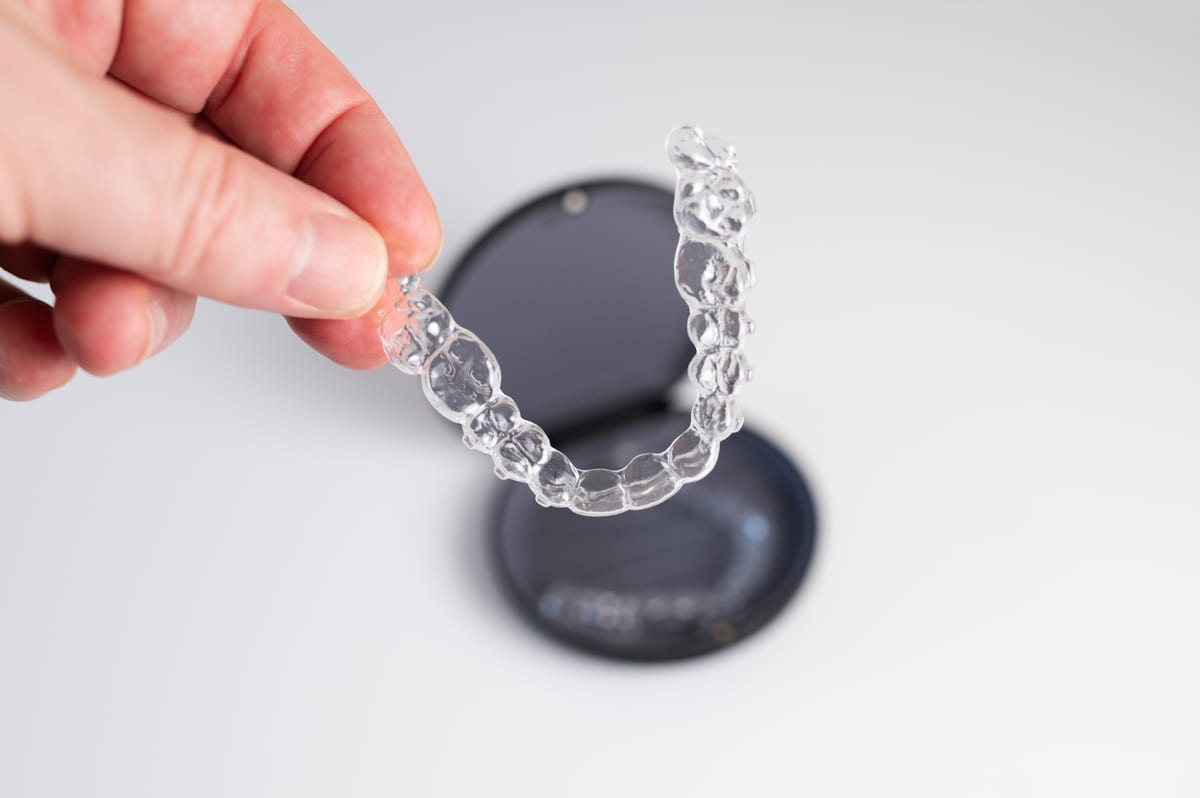
Invisalign uses a series of custom clear aligners to gradually move teeth into healthier, more balanced positions. The aligners are removable, comfortable, and designed to fit closely over the teeth. Many adults and teens choose Invisalign because it provides a discreet alternative to traditional braces.
Invisalign can address many mild to moderate orthodontic concerns and may also be suitable for certain complex cases, depending on the patient’s bite, tooth movement needs, and personalized treatment plan.
Invisalign may help correct:
- Mild to moderate crowding, when teeth overlap or have limited space
- Spacing issues, including gaps between teeth
- Overbites, when the upper teeth extend too far over the lower teeth
- Underbites, when the lower teeth sit in front of the upper teeth
- Crossbites, when some upper teeth sit inside the lower teeth
- Open bites, when the upper and lower front teeth do not touch when biting
Invisalign technology has advanced significantly over the years. Some orthodontic concerns that once required traditional braces may now be treated with clear aligners. However, the best way to determine whether Invisalign is appropriate is through a professional orthodontic evaluation.
During your consultation, Dr. Tolleson will examine your teeth, bite, and jaw relationship to determine whether clear aligners can help you achieve your treatment goals or whether braces may provide better control for your specific needs.
When Traditional Braces May Be a Better Choice
Not every orthodontic case is an ideal fit for clear aligners. Traditional braces may be recommended for certain complex orthodontic concerns, particularly when precise control of tooth movement is needed.
Braces may be beneficial for:
- Severe crowding, when teeth are significantly overlapping or rotated
- Complex overbites or underbites
- Large gaps between multiple teeth
- Difficult tooth rotations
- Significant vertical tooth movement
- Complex bite concerns involving the relationship between the teeth and jaws
Because braces remain attached to the teeth, they apply continuous, controlled forces without depending on the patient to remember to wear a removable appliance. This can be helpful when treatment requires consistent control or when aligner wear may be difficult to maintain.
This does not mean braces are automatically better or faster. Treatment time depends on the complexity of the case, the planned tooth movements, and the individual patient. The goal is to choose the treatment option that can provide healthy, stable, and predictable results.
The Role of Patient Compliance in Invisalign Treatment
One important factor in determining Invisalign candidacy is patient compliance. Invisalign aligners must be worn as directed, typically for 20 to 22 hours per day. They should generally be removed only for eating, drinking beverages other than water, and completing your oral hygiene routine.
Invisalign may be a good option for motivated patients who are comfortable following a consistent daily routine. It can fit well into many adult lifestyles and is also popular among teenagers who can wear their aligners responsibly.
However, frequently removing aligners or forgetting to put them back in can affect how the teeth move. If aligners are not worn consistently, the teeth may not track according to the treatment plan, which can increase the need for additional aligners and extend the overall timeline.
Traditional braces do not require patients to remember to wear them because they remain fixed to the teeth throughout treatment. For some younger patients or individuals who may struggle with consistent aligner wear, braces may provide a more predictable treatment experience.
Your orthodontist will consider your habits, lifestyle, treatment needs, and preferences before recommending an option.
How Dr. Tolleson Evaluates Your Candidacy
Choosing between Invisalign and braces begins with a thorough orthodontic evaluation. The process involves more than simply examining whether your teeth appear crooked. Your orthodontist also considers your bite, jaw relationship, tooth positions, and the type of movement needed to achieve a healthy result.
During your consultation, you may receive:
- A detailed examination of your teeth and bite
- Digital X-rays and 3D scans to evaluate tooth positions and alignment
- A discussion about your orthodontic goals and lifestyle preferences
- An explanation of the treatment options that may be appropriate for your needs
- A personalized treatment plan with an estimated timeline and expected outcomes
Dr. Tolleson will explain the reasoning behind each recommendation in clear, easy-to-understand language. The goal is to help you understand your options and choose a treatment plan that supports your oral health and long-term results.
Invisalign vs. Braces: A Side-by-Side Comparison
Both Invisalign and traditional braces can produce excellent results. The right choice depends on your individual orthodontic needs and your ability to follow the recommended treatment plan.
| Feature | Invisalign | Traditional Braces |
|---|---|---|
| Appearance | Clear and discreet | More noticeable |
| Removability | Removable for meals and oral hygiene | Fixed to the teeth |
| Daily responsibility | Requires consistent wear | Works continuously |
| Oral hygiene | Easy to remove for brushing and flossing | Requires careful cleaning around brackets and wires |
| Complex cases | Suitable for many cases, depending on treatment needs | May provide greater control for certain complex movements |
| Comfort | Smooth aligners may cause less irritation to the cheeks and lips | Brackets and wires may cause temporary irritation |
| Treatment time | Varies based on case complexity and wear consistency | Varies based on case complexity and treatment needs |
The table provides a general comparison, but it should not replace a professional evaluation. Invisalign may be appropriate for some patients with complex concerns, while braces may be recommended for other cases that appear relatively simple. Your treatment plan should be based on your specific clinical needs rather than appearance or convenience alone.
How to Decide Which Treatment Is Right for You
When comparing Invisalign and braces, consider the following questions:
- Do you prefer a removable and less noticeable treatment option?
- Can you consistently wear aligners for 20 to 22 hours each day?
- Do you have a complex bite or significant tooth movement that may require additional control?
- Are you comfortable following the cleaning and dietary recommendations for braces?
- What are your goals for appearance, comfort, and treatment timing?
Your answers may help you understand your preferences, but only an orthodontic examination can determine which treatment is clinically appropriate.
The best treatment is not necessarily the most discreet or the fastest. It is the option that can safely and effectively address your orthodontic concerns while supporting a stable, healthy bite.
Take the Next Step Toward a Healthier, More Aligned Smile
Deciding between Invisalign and braces does not have to be overwhelming. The most important step is receiving a professional evaluation that considers your teeth, bite, goals, and lifestyle.
Dr. Shane Rex Tolleson and the team at Tolleson Orthodontics provide personalized recommendations based on each patient’s individual needs. Whether clear aligners or traditional braces are the better option, you can receive a clear explanation of your treatment choices and what to expect throughout the process.
You deserve an orthodontic treatment plan that works for your needs—not simply one that looks appealing in theory. Our team is committed to patient education, honest recommendations, and long-lasting results.
Call (817) 416-2200 to schedule your orthodontic consultation in Southlake, Texas.
Frequently Asked Questions
Can Invisalign fix a severe overbite?
Invisalign may treat some overbite concerns, but the suitability of clear aligners depends on the severity of the condition, the type of tooth movement needed, and the patient’s overall bite. More complex cases may benefit from traditional braces or another orthodontic approach. Dr. Tolleson can evaluate your bite and recommend the most appropriate treatment.
How do I know if I’m a candidate for Invisalign?
The best way to determine Invisalign candidacy is through a professional orthodontic examination. Digital imaging, scans, and bite analysis can help identify whether clear aligners can effectively achieve your treatment goals. Your orthodontist will also consider your ability to wear the aligners consistently.
Is Invisalign faster than braces?
Neither treatment is automatically faster. Treatment time depends on the complexity of the case, the planned tooth movements, and patient cooperation. Many Invisalign cases may be completed within approximately 12 to 18 months, but timelines vary. Your orthodontist can provide an estimate after evaluating your teeth and bite.
Can teenagers use Invisalign instead of braces?
Yes. Invisalign offers options designed for teenagers, and many teens can achieve successful results with clear aligners. Consistent wear is essential, so the orthodontist will consider the patient’s treatment needs and ability to follow the recommended wear schedule.
What happens if I do not wear my Invisalign aligners regularly?
Inconsistent aligner wear may cause teeth to move more slowly or stop tracking according to the treatment plan. The aligners may no longer fit properly, and additional treatment or refinement aligners may be needed. Wearing the aligners as directed helps keep treatment progressing as planned.